
Self Adhesive PP Materials: A Practical Guide to Choosing, Printing and Applying Polypropylene Label Stock
Most label failures do not come from a "bad" film. They come from a mismatch between the film, the adhesive, the surface and the printing process. Self adhesive PP materials (polypropylene film with a pressure-sensitive adhesive and a release liner) are popular because they are water resistant, flexible and tear resistant. Those same properties make them less forgiving than paper if a specification is wrong. This guide explains how to match the material to the job and how to avoid the most common problems.
1. What Self Adhesive PP Material Is Made Of
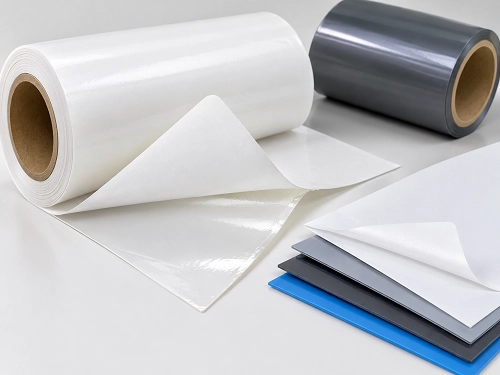
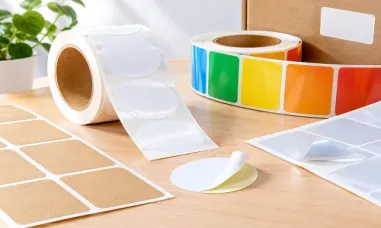
A pressure-sensitive label stock is a laminate of three parts: the face film, the adhesive and the release liner. Each one affects performance.
- Face film: polypropylene, often biaxially oriented (BOPP), which gives stiffness, clarity and moisture resistance. The surface is usually treated or coated so inks and toners can anchor.
- Adhesive: most often acrylic, or rubber-based hot melt for grip on difficult surfaces. Permanent and removable versions exist.
- Release liner: silicone-coated paper (glassine or PE-coated) or a film liner. It carries the label through printing and die-cutting and must release cleanly on the applicator.
Polypropylene has low surface energy, typically around 29 to 31 mN/m untreated. That is why it resists water so well, and also why it needs a corona treatment or a receptive top coating before printing. The ASTM D2578 test method for wetting tension of polyethylene and polypropylene films is the standard reference for checking this.
2. Why Choose PP Instead of Paper or PET
PP is not always the best answer. The table below shows where it fits and where a neighbouring material may be a better choice.
| Property | Self adhesive PP | Self adhesive PET | Self adhesive paper |
|---|---|---|---|
| Moisture and oil resistance | Very good | Excellent | Poor unless coated |
| Flexibility on squeezable containers | Good | Stiffer, may lift on curves | Limited |
| Heat stability | Moderate | Higher | Depends on grade |
| Tear resistance | Good | Very good | Low |
| Typical cost position | Mid | Mid to higher | Lowest |
Relative comparison based on general industry experience. Values differ by grade and supplier.
If your application needs higher temperature stability or a metallic look, review the PET options such as Bright Silver PET and Transparent PET. For a metallic PP look, see Bright Silver BOPP.
3. Choosing the Finish
The finish changes both appearance and print behaviour, so decide it early.
| Finish | Best for | Watch out for |
|---|---|---|
| White matte | Product and shipping labels, text-heavy designs, low glare under store lighting | Colours look slightly softer than on gloss |
| White glossy | Retail and beauty packaging where colour saturation matters | Fingerprints and scuffs show more; glare can hurt scanning |
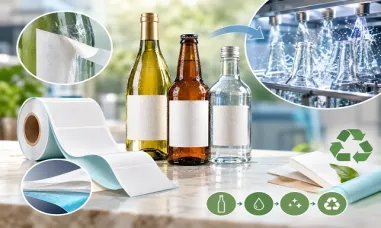
| Transparent (clear) | "No-label look" on glass or clear plastic | Bubbles, dust and adhesive flow are visible; the container colour shows through the ink |
A practical tip for clear labels: print a white underlayer beneath the artwork wherever you need opacity. Without it, coloured contents will change how the design looks.
4. Matching the Adhesive to the Surface
Adhesion problems are the most common complaint with PP labels, and they usually trace back to the surface, not the film. Plastics such as HDPE and PP bottles are low-energy surfaces, so a general-purpose adhesive can look fine on day one and fail later.
| Surface | Suggested adhesive approach | Note |
|---|---|---|
| Glass, metal, rigid PET | General permanent acrylic | Surface must be clean and dry |
| HDPE, PP, LDPE containers | High-tack or hot-melt rubber adhesive | Slip agents in the plastic can migrate and weaken the bond |
| Cardboard and corrugated | Permanent, often with good initial tack | Rough or dusty board needs higher tack |
| Cold or frozen items | Low-temperature or freezer grade | Standard adhesives may not wet the surface at low temperature |
| Temporary promotions | Removable adhesive | Confirm it does not leave residue after storage |
Adhesive strength is commonly measured with peel and tack tests, for example ASTM D3330 for peel adhesion and FINAT test methods (FTM 1 for 180° peel adhesion, FTM 9 for loop tack). Ask your supplier which method a quoted value came from, because numbers from different tests cannot be compared directly.
Dwell time matters. A pressure-sensitive adhesive builds most of its bond over the first 24 hours. Testing peel strength a few minutes after application will understate the final result, while judging a label after it has been through shipping too early can hide a problem.
5. Printing on Self Adhesive PP
The film supplier's product page lists compatibility with digital, offset, flexographic and thermal processes. In practice, the coating on the film decides the result, so confirm that the exact grade is designed for your process.
| Process | Typical use | Key check |
|---|---|---|
| Flexographic / UV flexo | Medium to long runs | Ink adhesion and full UV cure |
| Digital toner (laser) | Short runs, fast turnaround | Grade must be rated for laser heat; some films curl or distort |
| Inkjet | Colour-rich short runs | Needs an inkjet-receptive coating and correct ink type |
| Thermal transfer | Barcodes, ingredients, batch data | Use the recommended ribbon type for film |
| Offset | Sheet-fed jobs | Drying method and film flatness |
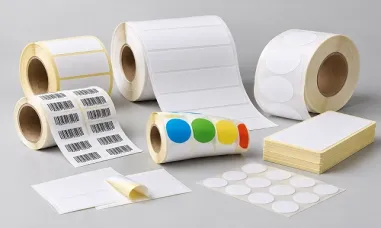
For labels carrying serial numbers, QR codes or batch data, the process is often digital or thermal. See the variable information printing materials for options designed around that need.
Simple ink test: print a sample, wait 24 hours, then apply and pull a strip of clear tape firmly over the print. If ink lifts, the coating, ink or cure is not right. Also run a rub or scratch check that reflects real handling.
6. Application Steps That Prevent Most Failures
- Clean the surface. Remove dust, oils and release agents. Isopropyl alcohol works for many surfaces, but let it fully evaporate.
- Check temperature. Many adhesives have a minimum application temperature, often around 5 to 10 °C. Check the datasheet for your grade.
- Apply with even pressure. Work from one edge to push air out and avoid trapped bubbles.
- Avoid sharp compound curves. Stiffer films can flag (lift at the edges) on tight radii. Smaller labels or a softer film help.
- Let it cure. Allow time before exposing labels to water, cold storage or heavy handling.
7. Troubleshooting Guide
| Symptom | Likely cause | What to try |
|---|---|---|
| Edges lifting after days | Container curvature, low-energy surface or low tack | Higher-tack adhesive, smaller label, rounded corners |
| Ink rubs off | Wrong coating or ink, incomplete curing | Confirm grade compatibility; add varnish or overlaminate |
| Bubbles under clear label | Trapped air, warm filling, outgassing | Adjust applicator pressure, allow bottle to cool, consider a different adhesive |
| Label wrinkles or curls | Humidity change, thermal stress | Store flat in a stable environment; test acclimatization before use |
| Adhesive oozing at edges | Roll pressure or heat in storage | Store cool, reduce roll weight, check adhesive coat weight |
| Poor die-cut or matrix stripping | Wrong liner or blade depth | Adjust die pressure; consider a different liner such as PE coated or silicone paper |
8. Storage and Shelf Life
Store rolls and sheets in their original packaging, away from direct sunlight, heat sources and moisture. A cool, dry room is best, commonly quoted as roughly 15 to 25 °C and moderate humidity. Rolls should lie flat or stand on their core, not be stacked in a way that crushes the edges. Let materials reach room temperature before printing, since cold stock can attract condensation. Shelf life varies by adhesive and liner, so check the supplier's stated period.
9. Sustainability: What to Claim Carefully
PP is a recyclable polymer in principle, and a single-polymer PP label on a PP container can suit certain recycling streams. Real recyclability, though, depends on the adhesive, inks, local collection and the sorting process. Avoid broad environmental claims on packaging unless they are supported by testing or a recognised recyclability assessment. Ask your supplier for support if this is a target for your brand.
10. How to Specify Your Order
Suppliers can recommend the right grade faster when you share the following.
- Container or surface material, shape and diameter
- Contents, and whether they are oily, wet, cold or hot-filled
- Storage and use environment, including temperature range and outdoor exposure
- Print process, ink type and any varnish or lamination
- Label size, roll or sheet format, applicator type
- Required service life and any regulatory needs such as food contact rules
About Zhejiang Wanbaolong Adhesive Products Co., Ltd.
Zhejiang Wanbaolong Adhesive Products Co., Ltd. supplies self adhesive label materials across film and paper families. Its product catalogue is organised into lightweight film, durable film, variable information printing, paper, special paper and PE coated paper and silicone paper ranges. The company presents its background on the About Us page, including Our Strength, and its production setup on the Factory Base and Global Network pages. For more reading, browse Industry News and Company News.
Related materials you may also want to compare include Glossy White PET (Coating), Matt Silver PET and Transparent PET (Coating).
Frequently Asked Questions
Can self adhesive PP be used outdoors?
Yes for many uses, since PP resists moisture and holds up well to weather. Outdoor life still depends on the ink, any overlaminate and the adhesive, so state the exposure period and conditions when you enquire.
Will it stick to squeezable plastic bottles?
PP film flexes better than PET, which helps. The adhesive still has to suit low-energy plastic, so test on the real bottle.
Is PP better than paper labels?
It is better where water, oil or handling would damage paper. For dry, indoor and cost-sensitive uses, paper can be the simpler choice.
Do I need a protective layer over the print?
If labels face abrasion, chemicals or long outdoor use, a varnish or overlaminate is usually worth testing.