

Self-Adhesive PVC Materials: How to Choose the Right Film, Adhesive and Printing Method
Self-adhesive PVC (polyvinyl chloride) is one of the most widely used face materials for durable labels, decals, signage and vehicle graphics. Many failures blamed on "bad vinyl" actually come from a mismatch between film type, adhesive, surface and printing process.
What Self-Adhesive PVC Is Made Of
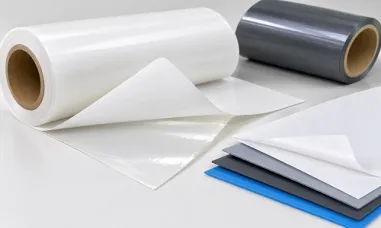
A self-adhesive PVC material is a laminate of three layers:
- Face film: the PVC layer that carries the print. It can be matte, glossy, transparent or colored.
- Pressure-sensitive adhesive: usually acrylic or rubber-based, and either permanent or removable.
- Release liner: a silicone-coated paper or film that protects the adhesive until application.
PVC is popular because it is flexible, tear-resistant, resistant to moisture and many chemicals, and accepts a wide range of inks. According to the WBL Self Adhesive PVC Materials product page, the range is intended for labels, decals, signage, branding and industrial use, indoors and outdoors, with matte, glossy and transparent finishes.
Step 1: Choose Between Calendered and Cast PVC
This is the decision with the biggest effect on cost and lifespan. The two manufacturing methods give films with different behavior. The values below are typical industry ranges and vary by manufacturer, so always confirm them against the supplier's technical data sheet.
| Factor | Calendered PVC | Cast PVC |
|---|---|---|
| Typical thickness | Thicker, roughly 70 to 100 microns | Thinner, roughly 50 to 80 microns |
| Conformability | Best on flat or gently curved surfaces | Better on rivets, corrugations and compound curves |
| Dimensional stability | Can shrink slightly over time | Very low shrinkage |
| Typical outdoor life | Short to medium term (often 3 to 5 years) | Medium to long term (often 7 years or more) |
| Relative cost | Lower | Higher |
| Best fit | Product labels, flat signs, promotional decals | Vehicle wraps, curved surfaces, long-term outdoor graphics |
Practical rule: if the graphic must stretch into recesses or stay dimensionally exact for years, pay for cast film. If it goes on a flat surface for a product's service life, calendered film is usually the efficient choice.
Step 2: Match the Adhesive to the Surface and the Environment
Adhesive choice matters as much as the film. Three things are worth checking:
- Surface energy. Glass, metal and painted surfaces bond easily. Low-surface-energy plastics such as polyethylene (PE) and polypropylene (PP) need a specially formulated adhesive. A general-purpose adhesive may look fine on day one and lift later.
- Service temperature. Applying the label and using it are different conditions. Most pressure-sensitive adhesives have a minimum application temperature, often around 10°C (50°F). Cold-room and freezer applications call for a dedicated cold-temperature adhesive.
- Plasticizer migration. Flexible PVC contains plasticizers. Over time, low-molecular-weight plasticizers can move into the adhesive layer, softening it and reducing hold, or causing edge ooze. Films with polymeric (low-migration) plasticizers reduce this risk. It matters most when labeling soft PVC substrates such as cables, hoses or flexible packaging.
Adhesion is measured with standardized tests: peel adhesion (for example ASTM D3330 or the FINAT FTM 1 method), loop tack, and shear resistance. Ask for these values on the data sheet and compare them against your target surface, not just a generic steel panel.
Step 3: Pick a Compatible Printing Method
PVC film accepts many print processes, but each needs the right surface and ink system. WBL states that its PVC materials work with digital, UV, solvent and screen printing. Some processes are limited to specific film grades, so confirm that the grade you choose is suited to your process.
| Method | Best for | What to watch |
|---|---|---|
| Solvent / eco-solvent inkjet | Outdoor signage, large-format graphics | Allow full outgassing before laminating or applying |
| UV inkjet / UV flexo | Short runs, durable labels, fast turnaround | Ink flexibility on tight curves; check cure level |
| Screen printing | Bold solid colors, long runs, industrial markings | Film must be dimensionally stable for multi-color registration |
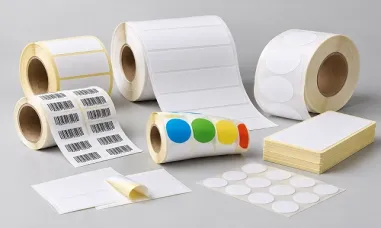
| Thermal transfer | Barcodes, serial numbers, variable data | Requires a ribbon-compatible coated face; check scratch and chemical resistance |
For variable data such as serial numbers and QR codes, see WBL's variable information printing materials.
Step 4: Match the Material to the Application
| Application | Suggested film | Suggested adhesive | Key requirement |
|---|---|---|---|
| Outdoor signage | Calendered or cast, UV-stabilized | Permanent acrylic | UV and weather resistance |
| Vehicle graphics | Cast | Permanent, often air-release type | Conformability, low shrinkage |
| Industrial and equipment labels | Calendered, matte | High-tack permanent | Chemical and abrasion resistance |
| Product and brand labels | Glossy, matte or transparent | Permanent, or low-temperature if chilled | Print quality and moisture resistance |
| Window and "no-label" look decals | Transparent | Clear permanent or removable | Clarity, no bubbles or haze |
Application Best Practices
Good application prevents most field failures:
- Clean the surface with an isopropyl alcohol and water mix. Avoid cleaners that leave oily or silicone residues.
- Apply within the recommended temperature range, typically 10°C to 35°C, and keep the surface dry.
- Use firm, even pressure, for example with a squeegee or roller, working from the center outward to avoid trapped air.
- Allow dwell time. Adhesion keeps building after application. Many pressure-sensitive adhesives reach full strength after roughly 24 to 72 hours, so avoid washing or stressing the label before then.
- Seal edges on challenging surfaces, such as textured or powder-coated metal, with a final roll-down.
Troubleshooting Common Problems
| Symptom | Likely cause | Fix |
|---|---|---|
| Edges lift after a few days | Low-energy surface, curved surface, or contamination | Use a low-surface-energy adhesive or cast film; re-clean the surface |
| Adhesive oozes at edges | Plasticizer migration, excess heat or pressure | Choose a low-migration film; check storage and die-cut conditions |
| Film shrinks, leaving adhesive visible at edges | Calendered film under thermal stress | Switch to cast film or a smaller, more stable size |
| Ink rubs off or smears | Ink/film mismatch or incomplete curing or drying | Verify ink compatibility; extend drying or curing; add overlaminate |
| Colors fade outdoors | Non-UV-stable inks or no protective layer | Use UV-stable inks and a UV-blocking laminate |
| Bubbles under the film | Trapped air or outgassing from a substrate | Use air-release adhesive; pre-bake or degas plastic parts |
Test Before You Commit to a Full Order
Data sheets describe standard test conditions. Your product has its own surface, climate and handling. Before volume production, run a small pilot:
- Apply samples to your actual substrate, not a test panel.
- Condition them for 72 hours, then test peel and tack at your real use temperature.
- Expose samples to the real stresses: water immersion, cleaning agents, heat cycles, or accelerated UV exposure (for example, ASTM G154 fluorescent UV methods).
- Check print durability by rubbing, scratching and chemical wipe tests.
Compliance and Sustainability Considerations
If you sell into regulated markets, check the following with your supplier and keep documentation on file:
- REACH (EU Regulation 1907/2006) for substances of very high concern.
- RoHS (EU Directive 2011/65/EU, as amended) if labels go on electrical or electronic equipment, including its limits on certain phthalates.
- Food and pharmaceutical use: labels that may come near food or medicine need separate migration and safety review.
On sustainability, PVC has a mixed profile. It is durable, which reduces replacement waste, but it is difficult to recycle with common packaging streams and can contaminate PET recycling if left on bottles. WBL states that it offers recyclable and low-VOC PVC options and can advise on eco-friendlier choices. If recyclability is a priority for packaging, consider whether a PET or PP film is a better fit. See WBL's durable film series and lightweight film series for alternatives.
What to Send Your Supplier to Get an Accurate Quote
| Item | Why it matters |
|---|---|
| Target surface and material | Determines adhesive type |
| Indoor or outdoor, expected lifespan | Determines calendered vs. cast and UV stabilization |
| Application and service temperature range | Determines standard vs. low-temperature or high-temperature adhesive |
| Print method and ink type | Determines face coating and film grade |
| Finish (matte, glossy, transparent) and color | Determines appearance and opacity |
| Roll width, core size, sheet size, die-cut shape | Determines conversion and minimizes waste |
| Regulatory requirements | Determines which documents and tests are needed |
About Zhejiang Wanbaolong Adhesive Products Co., Ltd.
According to its company profile, Zhejiang Wanbaolong Adhesive Products Co., Ltd. (formerly Shanghai Canglong) was established in 2005 and is headquartered in the Jianshan New District of Haining, Zhejiang. The company reports more than 300 employees, including over 60 technical specialists such as chemical engineers and material experts, and more than 50 automated production lines covering laminating, silicone coating, coating, printing and cutting. It lists over 200 label material types, including PVC, PET, PP, PC and PE films and a range of paper stocks, serving industries such as food, daily chemicals, pharmaceuticals, automotive, electronics and logistics, with customers in more than 50 countries and regions.
Learn more on the Factory Base and Global Network pages, browse the full product catalog, or read more industry news.
Frequently Asked Questions
Is self-adhesive PVC waterproof?
The film itself resists water well. Long-term performance depends on the adhesive, the edges and the ink or laminate. Sealed edges and a suitable adhesive matter in constant-wet or immersion conditions.
How long does it last outdoors?
It varies with film type, climate, mounting angle and print protection. Calendered films commonly last a few years, and cast films longer. Check the manufacturer's stated durability for your climate.
Can it stick to plastic?
Yes on many plastics. For PE and PP, request an adhesive designed for low-surface-energy materials and test it on your actual part.
Matte, glossy or transparent?
Matte reduces glare and suits text-heavy labels. Glossy gives stronger color saturation. Transparent suits glass, windows and "no-label" looks, and requires special care with clean application.